









How to Choose Deposition Area and Chamber Size for MPCVD Equipment?
In selecting MPCVD (Microwave Plasma Chemical Vapor Deposition) equipment, deposition area and chamber size are two of the most critical parameters—they directly determine the maximum diamond product size you can produce and the overall production efficiency.
I. Understanding the Relationship
Deposition area refers to the effective diameter over which the plasma can uniformly cover the substrate and enable high‑quality diamond growth; chamber size determines the spatial volume within which the plasma ball can be stably sustained. The two are mutually constraining: a larger chamber theoretically supports a larger deposition area, but it becomes more difficult to maintain a uniform microwave electric field distribution. Poor chamber design leads to uneven plasma density between the center and the edge, resulting in non‑uniform diamond quality.
Conventional 2.45 GHz MPCVD systems, limited by wavelength and chamber geometry, typically offer a deposition diameter of 50–70 mm. In recent years, optimized chamber designs have extended this to 90 mm for some 2.45 GHz units. In contrast, 915 MHz systems, due to their longer wavelength, provide an effective deposition diameter approximately 2.67 times that of 2.45 GHz, supporting diameters of 150–200 mm or even larger.
II. Selection by Application Scenario
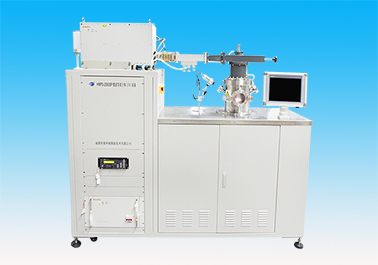
- R&D and small‑batch production: 6 kW‑class 2.45 GHz MPCVD systems with a deposition area of 50–60 mm – suitable for universities and research institutes for process development and small‑sample preparation.
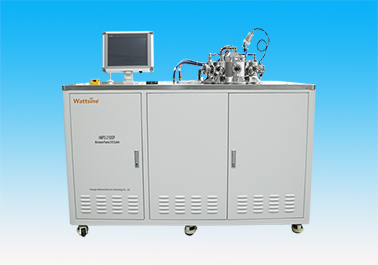
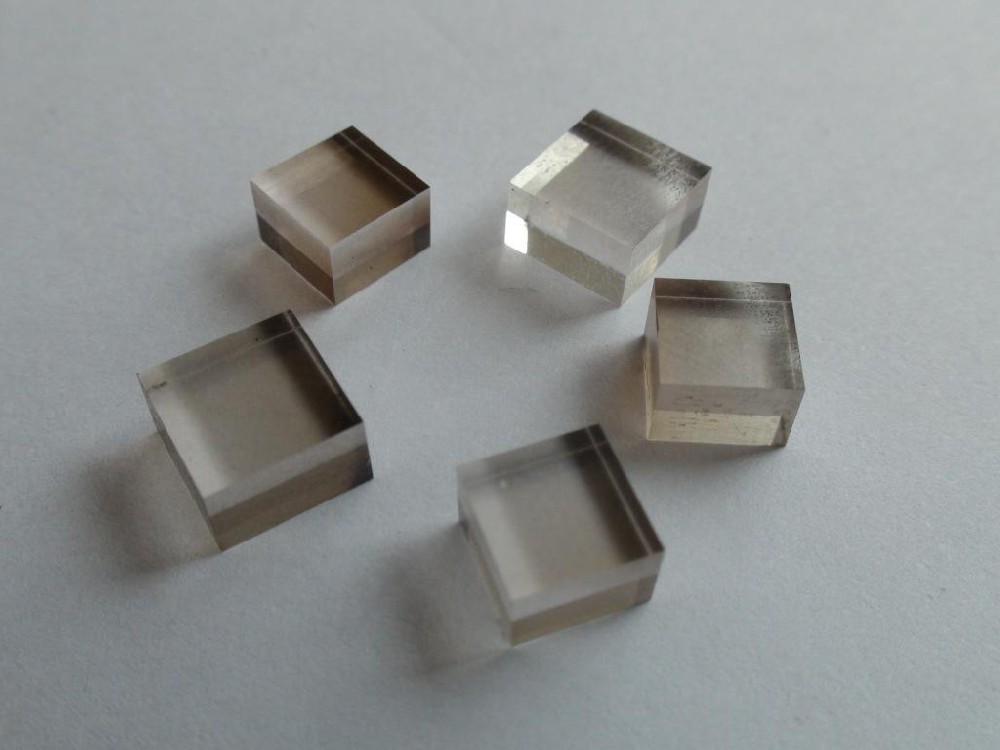
- Stable mass production: 10–15 kW‑class 2.45 GHz MPCVD systems with a deposition area of 80–100 mm (approximately 4 inches) – ideal for batch production of synthetic diamonds, heat sinks, and similar products.
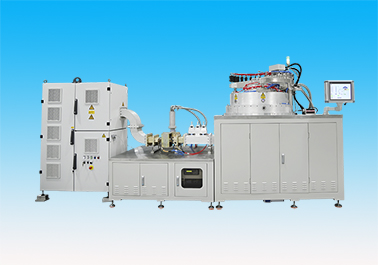
- Large‑scale industrial production: 75 kW‑class 915 MHz MPCVD systems, offering a discharge diameter ≥300 mm and a uniform deposition zone ≥200 mm, capable of reliably producing diamonds of 6 inches and above. These are suited for high‑end products such as optical‑grade diamond windows and large‑format heat sinks.
III. Key Decision Criteria
- Product size: What diameter does your final product require? The deposition area must at least cover the product size; otherwise, single‑step forming is impossible.
- Chamber design: At the same frequency, the chamber structure sets the upper limit of the deposition area. The two mainstream configurations—cylindrical resonant cavities and non‑cylindrical multi‑mode resonant cavities—differ significantly in uniformity and power‑handling capability.
- Power matching: Larger deposition areas demand higher microwave power to sustain adequate plasma density. 915 MHz MPCVD systems generally require higher power levels and involve more complex structural and vacuum requirements.
- Scalability: If you plan future capacity expansion, choose a system that supports chamber upgrades or deposition‑area extension.
IV. Reference Case
Take the Hueray Microwave HMPS‑9750S MPCVD equipment as an example: it employs a 915 MHz / 75 kW configuration, equipped with a “new‑generation large‑volume bottom‑feeding annular working chamber.” Through TM02 dual‑mode discharge technology, it achieves a discharge diameter ≥300 mm and a uniform deposition zone ≥200 mm. This design balances large‑area deposition with plasma uniformity, covering the production needs of 6‑inch‑and‑above nanocrystalline diamond, optical‑grade diamond windows, and single‑crystal diamond heat sinks for high‑end applications.
Conclusion
There is no single “standard” answer for choosing deposition area and chamber size—the decision must be based on your product positioning, production capacity goals, and long‑term roadmap. For small‑scale R&D, a cost‑effective 2.45 GHz MPCVD equipment is a sound choice; for large‑scale production, 915 MHz MPCVD equipment is the inevitable path. Before making a selection, clearly define what products you intend to produce, at what scale, and then match the corresponding power and chamber configuration to your actual needs.
- > Hueray Microwave successf··· 2006-10-12
- > From Lab to Production Li··· 2026-10-30
- > MPCVD Equipment Prices Dr··· 2026-09-29
- > The MPCVD Route to Advanc··· 2026-08-27
- > How to Choose Deposition ··· 2026-07-30
- > Microwave Plasma Chemical··· 2026-06-18
- > Professional Diamond Grow··· 2026-06-05
- > The three key advantages ··· 2026-04-14
Recommended Products