









From Lab to Production Line: How MPCVD Is Industrializing Diamond
A decade ago, MPCVD (microwave plasma chemical vapor deposition) was still a niche technique confined to a handful of research institutes. Today it underpins a fast-growing industry. From lab-grown diamond counters to semiconductor heat spreaders, MPCVD is turning the hardest material known into one of the hottest commercial opportunities.
The turning point: from "can we grow it" to "can we grow it big and clean"
The principle behind MPCVD diamond growth is straightforward. Methane and hydrogen are decomposed in a microwave plasma, and carbon atoms deposit layer by layer onto a substrate. The hard part is engineering. For years, single-crystal growth rates hovered in the range of a few microns per hour, crystal size was capped by the seed, and color and defect control directly determined yield.
Recent advances are removing these constraints one by one. Microwave power has climbed from a few kilowatts to tens of kilowatts, and with larger resonance cavities the uniform deposition zone now exceeds 200 mm in diameter—enough to produce 6-inch and even 8-inch diamond wafers. Multi-seed tiling, pulsed growth and lateral epitaxy have raised crystal size and growth rate together. An order-of-magnitude gain in growth rate steepens the cost curve—the fundamental reason lab-grown diamond prices have fallen so sharply over the past decade.
Two commercial routes driven by application
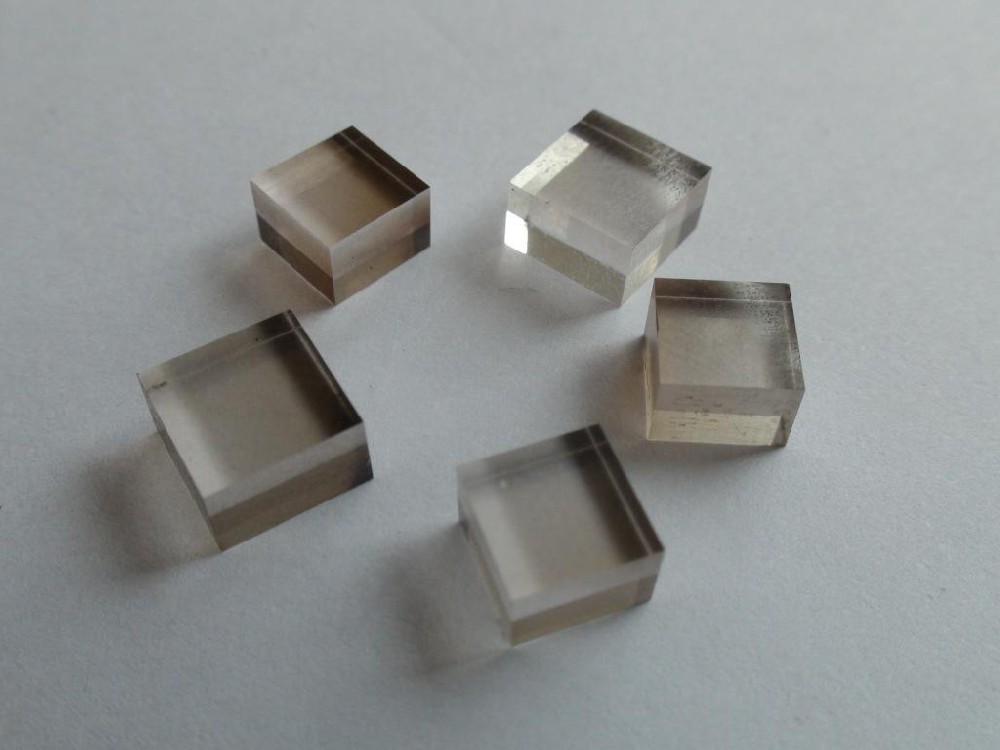
Route one: consumer lab-grown diamond. High-purity single crystal grown by MPCVD is chemically and physically identical to natural diamond, with color controllable through nitrogen or boron doping, and is graded by GIA, IGI and other major laboratories. As younger buyers favor sustainability and traceability, lab-grown diamond penetration keeps rising.
Route two: industrial functional diamond.This is where the larger opportunity lies. With thermal conductivity above 2000 W/(m·K)—roughly five times that of copper—diamond is an outstanding heat spreader for high-power chips. Its wide bandgap (5.47 eV) makes it a candidate for high-temperature, radiation-hard power devices, while optical-grade diamond windows are widely used in high-power lasers and infrared systems. Diamond color centers are also moving from research into engineered quantum sensing.
Equipment independence: Hueray's localization drive
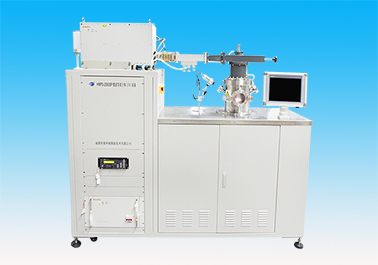
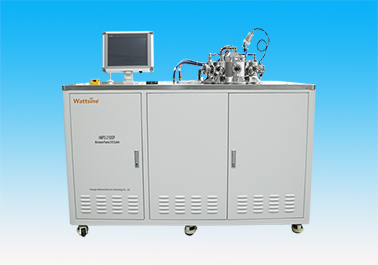
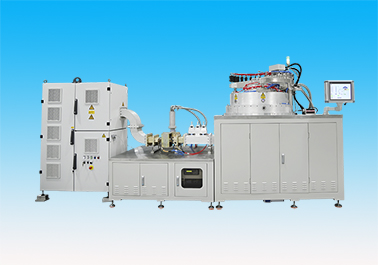
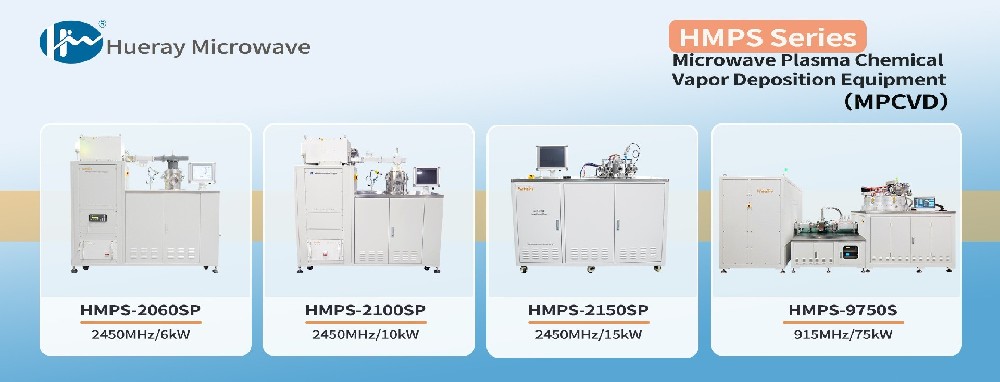
Industrial scale-up depends on equipment independence. For a long time, high-end MPCVD systems were dominated by overseas suppliers, with high unit prices and long lead times. Hueray Microwave has focused on microwave plasma application technology for more than 20 years and now offers a complete MPCVD portfolio spanning 10 kW laboratory systems to 75 kW production platforms. The company's core parameters—power stability, vacuum performance and uniform deposition area—match international advanced levels, with microwave sources and other key components fully localized. With this self-reliant platform, Hueray helps customers reduce capital outlay and shorten delivery cycles, accelerating diamond production line build-out.
Outlook
The MPCVD story is a dual drive of materials innovation and equipment innovation. As growth rate, crystal size and equipment cost all move in the right direction, diamond's path from jewelry counter to chip cooling and quantum devices will only accelerate. Over the next decade, this lab-grown crystal is set to become a base material of advanced manufacturing.
- > Hueray Microwave successf··· 2006-10-12
- > From Lab to Production Li··· 2026-10-30
- > MPCVD Equipment Prices Dr··· 2026-09-29
- > The MPCVD Route to Advanc··· 2026-08-27
- > How to Choose Deposition ··· 2026-07-30
- > Microwave Plasma Chemical··· 2026-06-18
- > Professional Diamond Grow··· 2026-06-05
- > The three key advantages ··· 2026-04-14
Recommended Products