









MPCVD Equipment Prices Drop Over 40%, Cutting Diamond Production Costs
China's MPCVD Equipment Bottleneck Is Opening Up
For years, the hardest part of the diamond supply chain to control was the equipment itself. That is now changing. Domestic MPCVD systems in China have made successive breakthroughs in microwave sources, cavity design, and control systems, and the equipment bottleneck at the top of the diamond value chain is gradually being opened.
Public industry data shows that average prices for high-power MPCVD equipment have fallen from RMB 8–12 million to RMB 3–5 million—a decline of more than 40%.
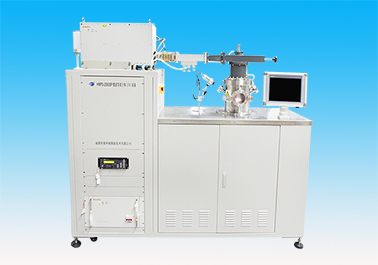
As one of China's earlier developers of microwave energy and microwave plasma applications, HUERAY-MICROWAVE (Chengdu Newmann & Hueray Microwave Technology Co., Ltd.) has built an MPCVD equipment portfolio spanning 6 kW to 75 kW.
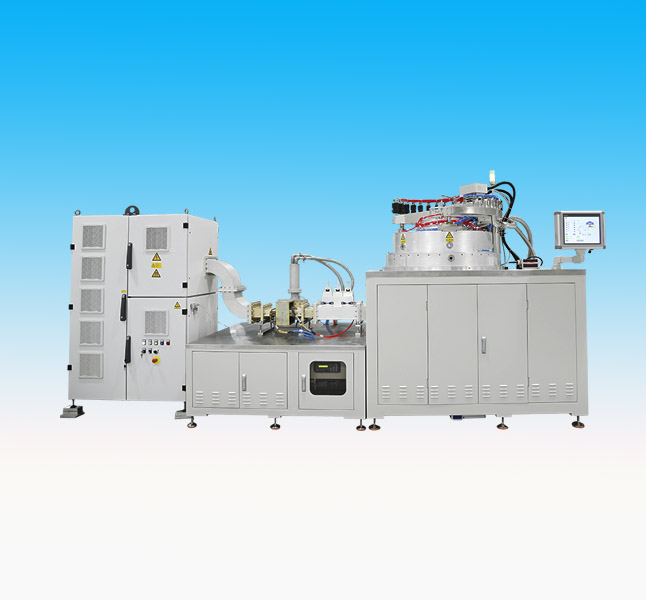
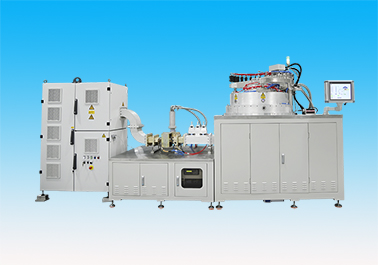
HUERAY-MICROWAVE HMPS-9750S MPCVD system
Why MPCVD Equipment Defines Diamond Performance
The dominant industrial route for synthetic diamond is microwave plasma chemical vapor deposition (MPCVD). Microwave energy excites carbon-bearing gases such as methane and hydrogen into plasma, and activated carbon atoms crystallize layer by layer on the substrate. Compared with hot-filament routes, MPCVD offers no electrode contamination, higher plasma density, and lower impurity levels, making it the mainstream technology path for high-purity, large-area diamond.
The process places demanding requirements on equipment across four dimensions. Microwave source power stability drives crystal defect density. Cavity electromagnetic field distribution determines film thickness uniformity. Substrate temperature field control affects warping and cracking. Gas purity and vacuum level set the ceiling on diamond thermal conductivity. Growth rate, crystal quality, and batch yield—the three core metrics—are ultimately decided by the MPCVD equipment itself.
The Three Constraints of Imported MPCVD Equipment
Before domestic production matured, high-power MPCVD equipment was supplied mainly by a small number of overseas manufacturers. Chinese users faced three constraints: high price, long lead times, and closed parameters. A single unit could cost several million RMB, with high-end models reaching tens of millions. Delivery cycles were often measured in years. Core process parameters were not open, which meant users had to adapt their process to the equipment—not the other way around. High equipment cost, long capacity expansion cycles, and limited process optimization kept diamond heat spreaders and similar products stuck in the "excellent performance, prohibitive price" stage.
Prices Down More Than 40%: The Cost Curve Is Bending
The turning point came as domestic MPCVD equipment matured. According to public industry data, imported high-power MPCVD systems were previously priced at RMB 8–12 million, while comparable domestic models now cost more than 40% less.
This is not the result of a price war. It reflects genuine independent breakthroughs in microwave sources, cavity design, control systems, and system integration—and it is pushing the unit cost of diamond materials onto a downward path.
HUERAY-MICROWAVE: Microwave Source and Cavity, Both Developed In-House
Among domestic MPCVD equipment makers, HUERAY-MICROWAVE has taken a more thorough route. The company develops not only the cavity and complete system, but also the microwave power source—the component most vulnerable to supply chain restrictions.
With more than 20 years focused on industrial microwave energy applications, HUERAY-MICROWAVE's core capabilities cover four areas: microwave generation and control, microwave transmission and matching, cavity structure design, and MPCVD diamond production equipment. The company holds 48 patents.
Its MPCVD equipment portfolio now covers the full power range:
HMPS-2060SP — 6 kW / 2450 MHz, power stability 1%, suited to lab-grown diamond and single-crystal growth
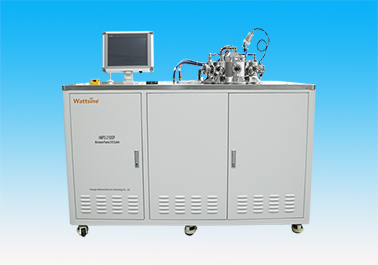
HMPS-2150SP — 15 kW, discharge zone diameter ≥100 mm, supporting single-crystal and polycrystalline production
HMPS-9750S — the flagship production model, using a 915 MHz / 75 kW solid-state microwave power source, a new-generation large-volume annular reaction cavity, and TM02 dual-mode discharge
The HMPS-9750S delivers a discharge zone diameter exceeding 300 mm, with a uniform deposition area of at least 200 mm. Power stability is better than ±1%, and ultimate vacuum reaches 6×10⁻⁶ torr. It supports high-quality diamond deposition on 2–12 inch substrates, making it suitable for nanocrystalline diamond above 6 inches, optical-grade CVD windows, and CVD single-crystal diamond heat spreaders.
Where the Diamond Goes
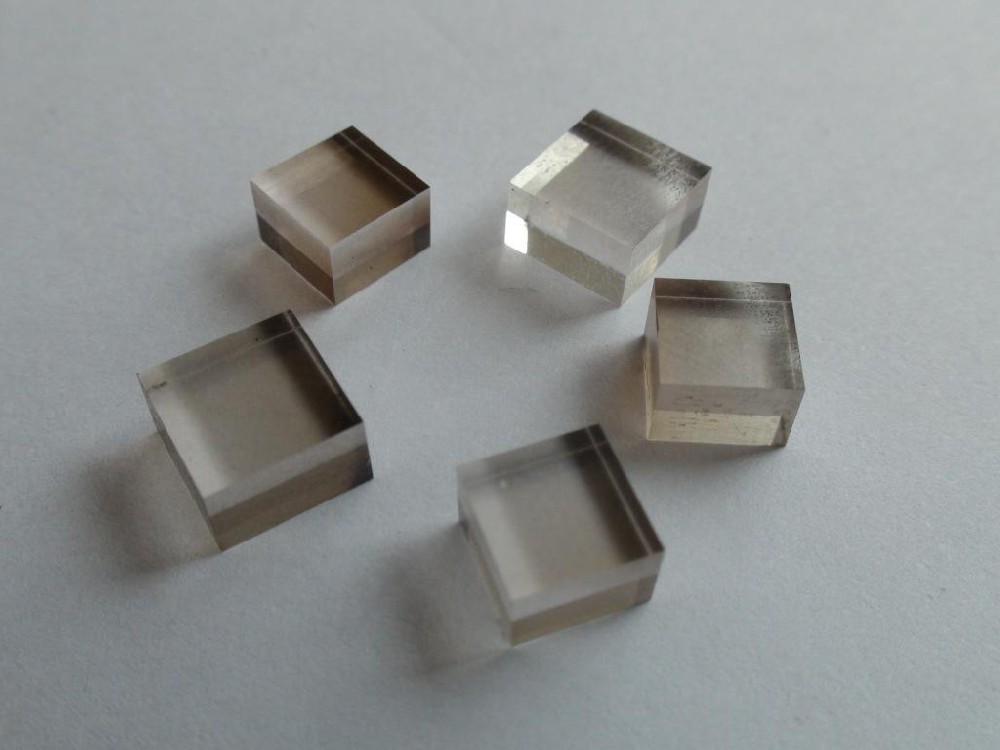
Diamond grown on HUERAY-MICROWAVE equipment reaches thermal conductivity up to 2000 W/(m·K). In thermal management, it serves 5G base stations, AI chip cooling, and EV power electronics. In optics, it is used for high-power laser windows and missile domes. In superhard machining, it supports large-format diamond cutting tools. Applications are also expanding into quantum technology, biomedical devices, and radiation detectors.
The DiaMiner series of lab-grown diamond equipment targets batch production of large-area, high-quality single-crystal and polycrystalline diamond.
From "Cheaper" to "Controllable"
The significance of domestic MPCVD equipment goes beyond price. Lower procurement cost buys you the machine; open parameters give you process sovereignty.
For polycrystalline heat spreaders, the priority is optimizing power distribution and gas flow fields. For single crystal, it is precise control of temperature gradients and nucleation. For optical windows, it is strict control of impurities and thickness consistency.
HUERAY-MICROWAVE systems support custom gas lines for hydrogen, methane, nitrogen, and oxygen, and come with an automated process growth control system and inline vision inspection that monitors sample and plasma state in real time—so process iteration no longer depends on operator experience alone.
Total Cost of Ownership: Where Domestic Equipment Pulls Ahead
Equipment depreciation typically accounts for 30–40% of diamond material cost. Every 30% drop in equipment price translates to roughly a 10%+ drop in material cost.
Domestic equipment extends that advantage through operations and maintenance. Solid-state microwave sources run more efficiently and last longer. Localized service cuts response time from weeks to hours. Large-volume cavities with dual-mode discharge multiply the effective deposition area per run. That "equipment cost down → product cost down" chain is what is moving diamond from the lab to volume production lines.
What domestic MPCVD equipment changes is not just the price of a machine. It is the industry's control over pricing, iteration speed, and capacity expansion.
- > Hueray Microwave successf··· 2006-10-12
- > From Lab to Production Li··· 2026-10-30
- > MPCVD Equipment Prices Dr··· 2026-09-29
- > The MPCVD Route to Advanc··· 2026-08-27
- > How to Choose Deposition ··· 2026-07-30
- > Microwave Plasma Chemical··· 2026-06-18
- > Professional Diamond Grow··· 2026-06-05
- > The three key advantages ··· 2026-04-14
Recommended Products