









How Much Does an MPCVD System Cost? Configuration First, Quotation Second
If you clicked on "how much does an MPCVD system cost," you probably came here for a number. We won't give you one upfront—and not to be coy about it. Our answer to "MPCVD equipment price" is always the same: define the process requirements first, then a quotation has a basis—and the number you get is one you can actually build a budget on.
MPCVD (microwave plasma chemical vapor deposition) equipment is purpose-built around process targets. There is no one-size-fits-all list price, and no fixed price tied to a model name. At the same power level, a system for research validation and a system for continuous production line operation differ in cavity, vacuum, measurement, and control configuration.
1. What Determines an MPCVD Equipment Quotation
Before a configuration is finalized, we confirm several conditions:
Process validation or mass production—and the target throughput
Substrate size, load per run, and whether single-crystal quality or deposition area takes priority
Target growth rate and frequency preference: 2.45 GHz or 915 MHz
On-site power capacity, high-purity gas supply, and cooling water conditions
Warranty scope and spare-parts supply requirements for core components
Once these are settled, the resonant cavity, microwave system, vacuum, and automation components are defined accordingly—and the quotation maps to a specific configuration. One common misunderstanding worth clearing up: the "10kW" in a model name is the microwave power level, not the total power drawn from the grid. Equate the two, and your electrical distribution cabinet will be the first to object.
2. MPCVD Equipment Selection: Two Frequencies, Two Different Jobs
2.45 GHz concentrates energy with high plasma density, suited to high-quality single-crystal growth and laboratory research; effective deposition diameter is limited by wavelength. 915 MHz, with its longer wavelength, produces a larger plasma region and targets applications requiring greater deposition area and throughput. The two routes call for different resonant cavity and transmission-matching designs—they are not options you can swap by changing a plug.
Power stability, electromagnetic field distribution in the cavity, vacuum leak rate, and temperature uniformity together determine defect density, warpage, and yield. These metrics may not sound glamorous, but they are exactly what must be verified item by item during selection. The microwave source is a separate consideration: magnetrons are the standard configuration and a consumable core component, so replacement cycles must be built into the operating budget; solid-state microwave sources offer advantages in service life and power stability. We configure both types according to process requirements—never assembling a solution from whatever happens to be in stock.
3. MPCVD Operating Costs: The Budget Is More Than the Furnace Line Item
Diamond growth rates run on the order of tens of microns per hour, and a single run often lasts hundreds of hours. While the system runs continuously, power, high-purity hydrogen and methane gas lines, and the cooling water system are all consuming resources; equipment costs accrue by operating time, and uptime and core-component replacement cycles directly affect cost per piece. Industrial projects typically fold these utilities and facility conditions into the production line budget—compare only the equipment line item, and the numbers won't reconcile later.
One compliance boundary to note: under current export control announcements, MPCVD equipment with microwave power above 10 kW and frequencies of 915 MHz or 2450 MHz falls within controlled scope. For cross-border delivery, please verify applicable clauses with us during the solution confirmation stage.
4. How an MPCVD Equipment Manufacturer Builds a Configuration-Based Solution
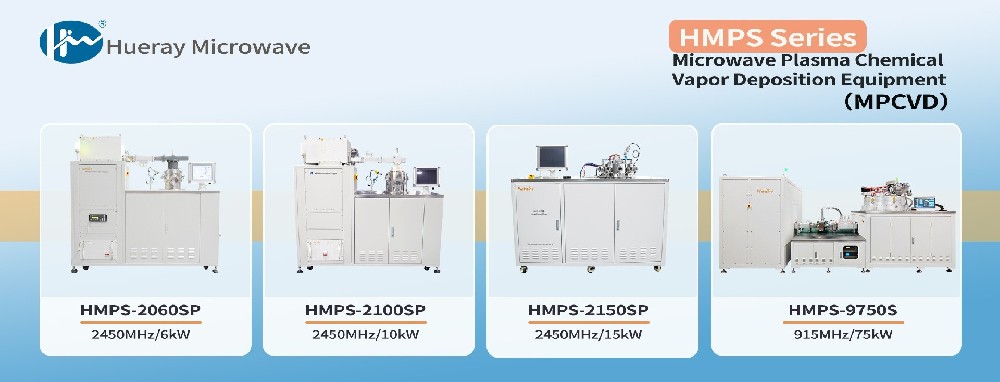
Newman-hueray (Chengdu Newman-hueray Microwave) develops in-house the full chain—microwave generation and control, microwave transmission and matching, cavity structure design, and complete system integration. Key links are independently controlled, enabling targeted design around the configuration items above. Our product range covers 6 kW to 75 kW and both 2.45 GHz and 915 MHz, supporting deposition on 2- to 12-inch substrates.
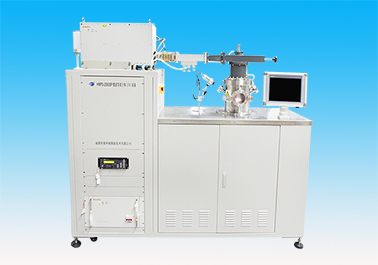
HMPS-2060SP: 6 kW / 2450 MHz, power stability 1%, for single-crystal growth and laboratory research
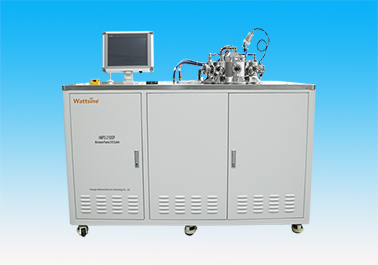
HMPS-2150SP: 15 kW, discharge zone diameter ≥ 100 mm
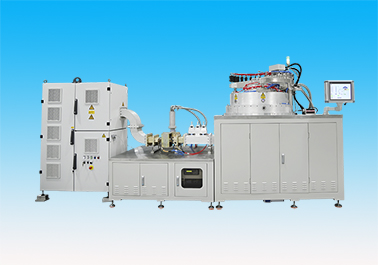
HMPS-9750S: 915 MHz / 75 kW solid-state microwave source, large-volume ring reaction cavity, TM02 dual-mode discharge, power stability better than ±1%, ultimate vacuum 6×10⁻⁶ torr, uniform deposition area ≥ 200 mm—built for mass production of large-size, high-quality diamond
These parameters are listed not so you can pick from a catalog, but to show that when we say "we tailor the solution to your process," we can back it up.
5. Getting an MPCVD Equipment Quote: Send Us These Details
Provide the following when inquiring, and we can begin the selection process: application and throughput target, substrate size and load per run, single-crystal or polycrystalline and quality requirements, target growth rate, frequency preference, on-site power and gas/water cooling conditions, and warranty and spare-parts requirements. Our technical team will then issue a configuration list, technical proposal, and corresponding quotation, followed by commercial confirmation.
So back to "how much does an MPCVD system cost"—the answer corresponds to a configuration plan, not a number posted on a page. Specific configurations, pricing, and commercial terms are subject to the technical agreement confirmed by both parties.
- > Hueray Microwave successf··· 2006-10-12
- > How Much Does an MPCVD Sy··· 2026-11-25
- > From Lab to Production Li··· 2026-10-30
- > MPCVD Equipment Prices Dr··· 2026-09-29
- > The MPCVD Route to Advanc··· 2026-08-27
- > How to Choose Deposition ··· 2026-07-30
- > Microwave Plasma Chemical··· 2026-06-18
- > Professional Diamond Grow··· 2026-06-05
Recommended Products